

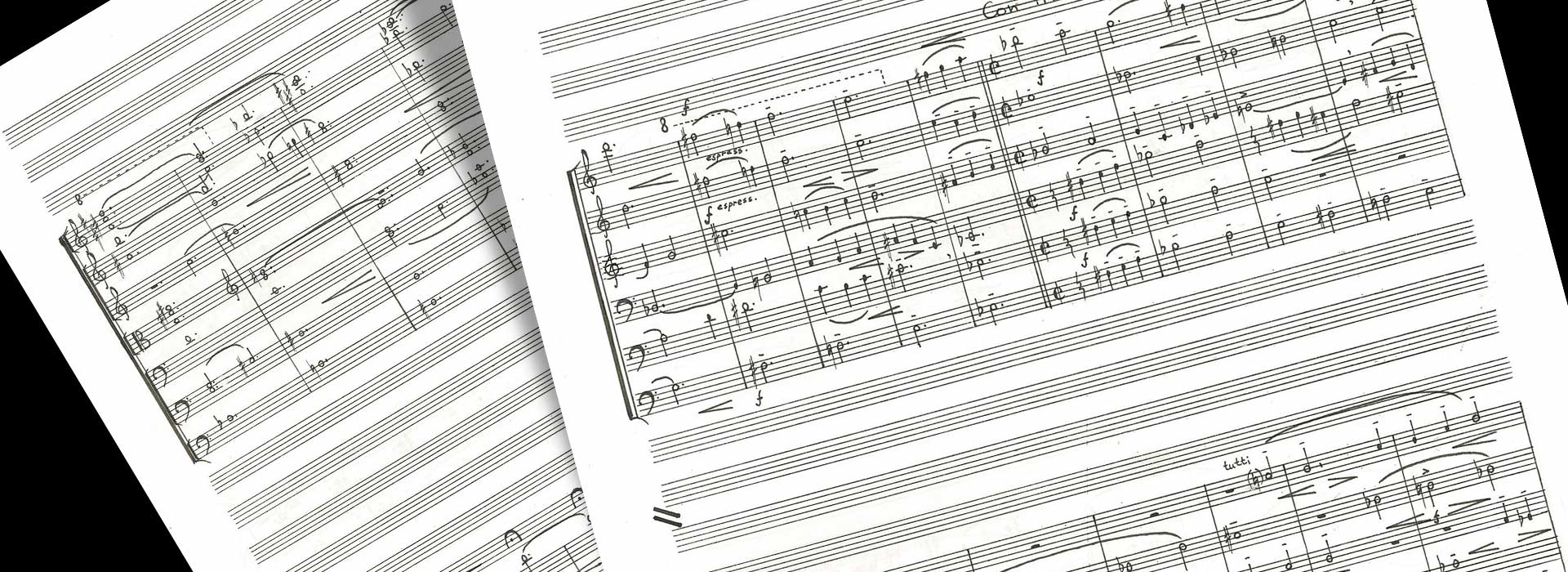
“Shunammit” (2013-25) Operatorio, for soloists, choir, symphonic orchestra and a rock band (OP.68)

Listen to SHUNAMIT (Act 1) HERE


Shunammit – Operatorium for voices, chorus and orchestra
Libretto: Esther Ettinger
The Story Synopsis
The play is based on the story of Elisha the Prophet and the Shunammite woman (Kings 2 4:8), as well the writings and annotations of Chazal, the Jewish sages of the Talmudic era.
Elisha the Prophet is the disciple and successor of Elijah the Prophet. He is a wonder-worker and helps those in need. One affair however tarnishes his beneficial image – his ruthless revenge on a group of boys who disrespect him.
The plot of the play revolves around the Shunammite woman who hosted the Prophet in her home. To thank her, the Prophet promises she will bear a son after many years of being barren. Alas, the child does not live long and Elisha the Prophet miraculously resurrects him.
Language and characters
The language of the play is poetic and draws upon both ancient Hebrew and contemporary Hebrew. The play features the Shunammite woman, Elisha the Prophet, his servant Gehazi and the choir of the Sons of the Prophets. The choir supplements the characters and moves the plot forward. Another character which appears in the piece is the Matriarch Sarah whose character is parallel to that of the Shunammite woman as a mutual fate brings them together.
Idea
The story of Elisha the prophet and the Shunammite woman is universal and still relevant. It exhibits characters which are impressive and strong and the events which unfold are dramatic and exciting. It contains elements of grace, devotion and faith as well as sin and redemption, alongside a struggle with a harsh reality and the possibility to escape such a reality through human action and divine miracle. The story raises many questions, mostly on behalf of those who were not granted a miracle. Although the ending is optimistic, it is also inconclusive and complicated.
Music
Just as the language of the text utilizes a fusion between olden and modern, producing a unique effect of a “current living ancient reality”, so does the music. It intertwines and organically mixes many layers of musical language and tradition. From a quasi- ancient Gregorian chant (which is believed by many scholars to be a remnant of Temple music – perhaps from the time of the Shunammite story itself), through the music of the Jewish liturgy, down to contemporary classical music and on to rock music elements. This makes the musical language accessible to a wider circle of contemporary listeners, while preserving a deep inner connection with a tradition going back thousands of years.
Genre
The particular scenic form of the piece, as is evident from the subtitle Operatorium, is meant to have characteristics of both Oratorio and Opera. It is close to Oratorio first and foremost due to the prominent role the Choir plays in the musical body of the piece, which stems from the text itself, drawing on Greek Theater tradition. On the other hand, the treatment of the drama is much more dynamic then is usually seen in Oratorio. Thus this particular blend makes a scenic rendition of the piece easier – as it could easily be performed in a concert hall, as well as on a stage, with minimalist scenic outfits and stage action.
Act I (Synopsis)
Location: Shunem
The chorus and Gehazi, Elisha’s servant, tell of the great miracles which the Prophet performed. They also relate the story of the boys eaten by bears because of Elisha’s anger and pride.
In Shunem, Elisha the Prophet stays in the home of a benevolent woman, the Shunammite, in a small room which she made up for him, taking care of everything he may require.
Elisha asks Gehazi how to repay the Shunammite for her hospitality and Gehazi tells him that the woman and her aged husband do not have children. Elisha calls the Shunammite and promises that in a year she will have a son. She is skeptic and asks the prophet not to lie to her or raise false hopes.
The Matriarch Sarah then appears and reassures the Shunammite’s doubts, insinuating that the prophet’s promise of a child is connected to his making amends after his sinful behavior towards the boys who were eaten by bears. The act ends with a duet between Sarah and the Shunammite and the chorus sings of the mothers’ fates.
Act II (Synopsis)
Location: Shunem, Mount Carmel, Elisha`s residence
Act II opens with the Shunammite recalling her son’s birth in the autumn light of the upper chamber prepared for the prophet. As the boy visits to the fields with his aged father, the chorus and Sarah press her with the question: “Where is the child?”. A youth enters bearing the faint child, who is laid on his mother’s knees as she tries to lull him back to life, while Sarah ominously insists that he is being brought from the field lifeless and that such tragedies are not new under the sun.
When the boy does not respond, the chorus urges the Shunammite to seek the prophet who once promised her a son. She carries the child to the prophet’s bed in the upper chamber, and vows to demand his life back. Determined, she orders a servant to drive without delay to Mount Carmel. Her husband questions her unusual journey, but she answers only, “Peace.”
On Carmel, the prophet sees her approaching, unaware of her trouble until her cry reaches him. Questioned through Gehazi about the welfare of herself, her husband, and the child, she repeats “Peace”, while inwardly bereft. Sarah comments bitterly on the men around the Shunammite and joins her in a plea not to be deceived, as the act closes with the prophet following the desperate mother.
Act III (Synopsis)
Location: Shunem.
Act III opened with the Shunammite rejecting any intermediary and insisting that only the prophet who had once invoked her son’s soul could restore his life. Around the house, the prophet, his servant, his staff, and the Shunammite herself gathered in tense anticipation of what would become of the child. The Shunammite prayed at the threshold of the locked upper chamber where the boy lay, calling upon God to open a gate of mercy and to let the spirit return to her son.
A ritual, almost liturgical exchange, rooted in the traditional Judgment Day service, unfolded between her and the chorus, who counted “One” to “One and seven” while invoking the merits of her kind deeds – as the woman’s pleas grew more urgent. Exhausted, she fell prostrate, and at that moment the prophet Elisha appeared carrying the now-living child and commanded that she take up her son.
Sarah then reflects on the Shunammite as “mother of weeping mothers,” recognizing that the miracle had occurred but sensing that both mother and child were changed by it. The chorus closed the act by praising the God who gives, takes, and gives again, acknowledging that, though death had been defeated this time, humanity would not forever overcome its mortal fate.